Spoken English
How to Practice Spoken English Alone at Home
No partner? You can still practice spoken English alone at home. Here are five solo methods and a 15-minute daily routine you can start tonight.

If you want to practice spoken English alone at home, you've probably been waiting for something: a fluent friend, a speaking club, a course that starts next month. Meanwhile the days pass and you never actually open your mouth in English. The problem usually isn't your grammar. You probably understand written English far better than you speak it.
What's missing is mouth practice and what we call Retrieval Speed: how quickly the right English words come to you when you need them, in a call, an interview or a chat with your child's teacher. Grammar notes and more English videos don't train Retrieval Speed. Speaking out loud does, and you don't need anyone else in the room to start, even if you're shy and your family is in the next room.
Fluency at home comes from speaking out loud every day, not from more grammar notes or more videos.
Three rules that make solo English practice work
Solo English practice works when it's out loud, short and daily, and private. Practicing alone usually fails for one of three reasons: it happens only in your head, it happens once a week for two hours, or it happens where you feel watched.
It must be out loud
Silent rehearsal in your head trains listening and thinking, not speaking. Your mouth, tongue and breath need the reps too. A whisper counts; thinking doesn't.
Short and daily beats long and rare
Fifteen minutes every day does more than two hours on Sunday. Memory research calls this the spacing effect: practice spread over many days sticks better than the same time crammed into one.
Privacy helps
Shyness shrinks when nobody is listening. Use the bathroom, the terrace, a walk with earphones in, or an app that only you can hear.
Silent study vs speaking out loud: what each one trains
Speaking out loud trains Retrieval Speed; silent study mostly trains understanding. Both are useful, but only one of them makes you sound more fluent. This comparison shows what each kind of English practice builds and what it leaves out.
| Type of practice | What it trains | What it misses |
|---|---|---|
| Grammar notes and English videos | Understanding, vocabulary you can recognize | Retrieval Speed, pronunciation |
| Silent rehearsal in your head | Planning what to say | Mouth practice, breath, timing |
| Speaking out loud alone | Retrieval Speed, fluency, pronunciation | Live replies from another person |
| Conversation with a partner (human or AI) | Listening and replying on the spot | A human partner isn't always free when you are |
Five ways to practice spoken English alone
These five methods are the core of English speaking practice by yourself. Each takes two or three minutes, and each comes with a prompt you can use tonight. Pick two to start; add the others once they feel easy.
Narrate your day
Describe what you're doing, as you do it, in simple English sentences. Don't worry about perfect grammar; keep the words flowing. If you think in Hindi or Hinglish, that's fine: when you get stuck on a word, describe it another way and move on.
Try this"I'm making chai. First I'm boiling the water, then I'll add ginger and tea leaves. The milk is almost finished, so I need to buy some tomorrow." (Main chai bana rahi hoon…)
Shadow a short clip
Shadowing means repeating a speaker's words right after them. Play a short clip of someone speaking clearly, pause after each sentence and repeat it out loud, copying the rhythm, the stress and the pauses. One short clip, repeated a few times, is enough, and it's one of the fastest fixes for common English pronunciation difficulties.
Try thisPick a 45-second news bulletin or a short interview answer. Shadow it three times: first slowly, then at normal speed, then without looking at the words.
Record a monologue and play it back
Speak on one topic for 60–90 seconds without stopping, then listen back. Notice your fillers ("umm", "basically", "actually") and any sentence you started but never finished. A voice recording is the closest thing to a teacher you can have at home.
Try this"Tell me about your hometown." Talk for 90 seconds about the food, the weather and one place you love there.
Role-play tomorrow's real conversation
Think of a conversation you'll actually have soon, then act it out. Play both people if you have to. Rehearsing the real thing means that when the moment comes, the words are already warm. For an HR round, start with these English interview questions and answers for freshers.
Try thisAn interview answer ("Tell me about yourself"), the first 30 seconds of a client call, a standup update, or a question for your child's teacher at the next PTM.
Retell what you watched or read
Pick one scene from a show, one news story or one WhatsApp forward, and retell it out loud in your own words, as if you were telling a friend. Retelling forces you to find words, not just recognize them, which is exactly how Retrieval Speed grows.
Try this"Last night I watched an episode where…" Tell the story of one scene in five or six sentences.

Running out of words while you narrate or retell is normal. Keep a short list of everyday phrases nearby: our list of 100 simple English sentences for daily use, with Hindi meaning is a good place to borrow from, and this guide to confident daily conversation in English has more ready-made topics.
A 15-minute daily routine for spoken English practice at home
This 15-minute routine combines the five solo methods into one daily session. It fits into a tea break, the time before everyone wakes up, or the last 15 minutes before bed.
-
0–3 minutes
Warm up: read a paragraph out loud
Any short paragraph works: a news story, a page of a book, a product description. The goal is just to get your mouth moving in English.
-
3–8 minutes
Shadow one short clip
Repeat the same 30–60 second clip a few times. Copy the rhythm first; the words will follow.
-
8–12 minutes
Free monologue, recorded
Talk about today's topic: your day, tomorrow's meeting, a scene you watched. Hit record and don't stop to correct yourself.
-
12–15 minutes
Play it back and note one mistake
Listen once. Write down one recurring mistake only, and focus on fixing just that tomorrow.
Skipped a day? Restart without guilt. Everyone misses days. A daily speaking routine only stops working if you stop coming back to it, so pick it up again the next day as if nothing happened.
How do you know your spoken English is improving?
Your spoken English is improving when real conversations get easier, not when a test says so. You won't get a CEFR level from practicing in your bathroom, and you don't need one. Look for these real-life signs instead; other people often notice them before you do.
- Shorter pauses. The gap before you answer a question in English gets smaller.
- Finished sentences. In GDs and calls, you complete your point instead of trailing off.
- Less translating. You stop building every sentence in Hindi or your mother tongue first.
- Others notice. A family member or colleague says you sound more fluent, sometimes before you feel it yourself.
Old voice recordings are the simplest progress tracker for solo speaking practice. Once every week or two, play an old recording next to a new one on a similar topic; the drop in pauses and fillers is easier to hear than to feel. To understand what fluency really means, read our guide to English speaking fluency. If you're preparing for a specific moment, this guide on improving English speaking fluency for job interviews shows how to turn the habit into interview-ready answers.
Where an AI English speaking partner fits
An AI English speaking partner fills the one gap in solo practice: nobody talks back. Narration and monologues build Retrieval Speed, while real conversation also needs you to listen, understand and reply on the spot.
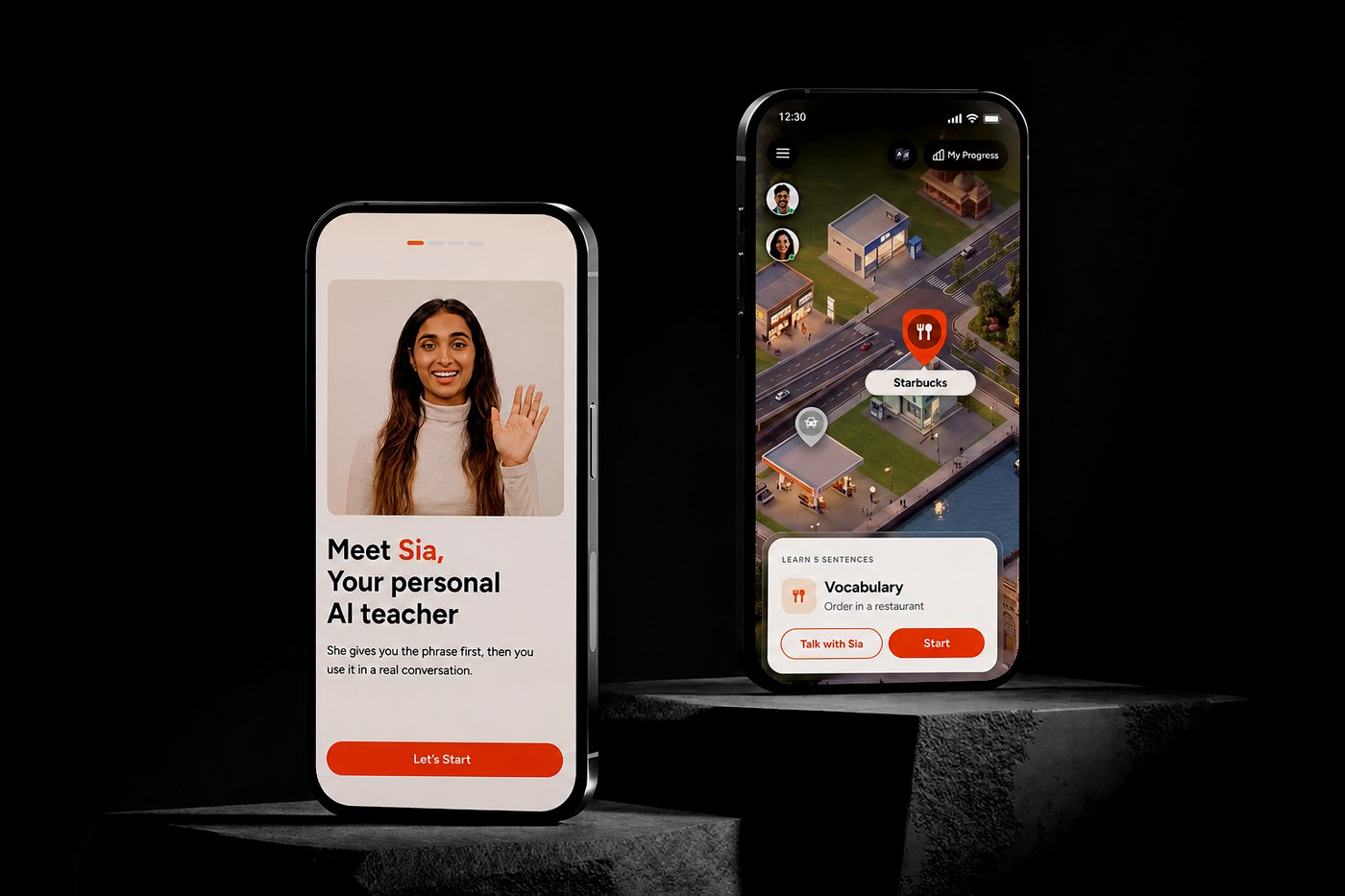
SpeakX is built as that kind of partner. It's private, so nobody at home has to overhear you. It's always available, so practice doesn't depend on someone else's schedule. It lets you start in the language you think in and then move toward English at your own pace, around the same 15-minute daily habit, with nobody judging your mistakes. Here's more on how a personal AI teacher app improves speaking confidence.
Use an AI partner as the "partner" in your solo routine: for the monologue minutes, or for role-playing tomorrow's interview, client call or parent-teacher meeting with someone who actually responds.
Why daily out-loud practice matters, and what to do next
Why this matters
Spoken English decides more outcomes than written English does. An HR round, a client call, a group discussion or a PTM is judged in real time, and nobody waits while you translate in your head. Learners who only read and watch English often know the right answer but freeze when they have to say it. Daily out-loud practice at home closes that gap privately, before the moment that matters. Fifteen minutes a day is small enough to keep doing for months, and months of short sessions add up to the fluency that one weekend crash course can't give you.
What to do next
Tonight, do one round of the 15-minute routine: read a paragraph out loud, shadow one clip, record a 90-second monologue and note one mistake. Repeat it every day this week, and keep every recording so you can compare them on day seven. Once the routine feels easy, add live conversation: role-play your next interview or client call with an AI speaking partner so you practice replying, not just talking. For a broader plan, follow our complete guide on how to speak English fluently.
Frequently asked questions about practicing spoken English alone
Can you improve spoken English without a speaking partner?
Yes, speaking out loud every day builds fluency even with nobody else in the room. Narrating your day, shadowing short clips, recording yourself and role-playing real conversations all train your mouth and your word recall. These methods improve Retrieval Speed, which is what makes you sound fluent. A partner adds live replies, and an AI speaking partner can fill that gap privately whenever you want it.
How many minutes a day is enough to practice spoken English at home?
Around 15 minutes a day is enough for most learners. It's short enough to repeat every day, and daily repetition matters more than long sessions. If you only have five minutes, do five: one short narration or a single recorded answer still keeps the habit alive.
Does practicing English in your head count?
Only partly, because silent rehearsal trains planning, not speaking. Rehearsing sentences silently helps you think in English, but your mouth, breath and timing only improve when you say the words out loud, even quietly. If you can't speak aloud where you are, plan your sentences silently and save the out-loud practice for a private moment later in the day.
What should I say if I don't know what to talk about?
Talk about what's in front of you. Describe what you're cooking, retell a scene you watched last night, explain your plan for tomorrow, or answer a common question like "Tell me about yourself." Real, everyday topics are the best practice because they're the conversations you'll actually have. Keeping a list of 10 go-to topics on your phone means you never waste practice time deciding.
Is shadowing good for improving spoken English?
Yes, shadowing is one of the best solo methods for rhythm, stress and pronunciation. You play a short clip, pause after each sentence and repeat it out loud, copying how the speaker sounds. Use 30–60 seconds of clear speech, like a news bulletin or an interview answer, and shadow it three times: slowly, at normal speed, then without reading the words.
How do I know if my spoken English is improving?
Look for real-life signs: shorter pauses before you answer, finished sentences in calls and GDs, and less translating from your mother tongue. Family or colleagues noticing your fluency is another strong sign. Comparing an old recording with a new one on a similar topic is a simple way to hear the change yourself, because the drop in pauses and fillers is easier to hear than to feel.