Here are 100 daily use English sentences in Telugu, each with its meaning in Telugu script, grouped by situation: greetings, home, office, asking for help, shopping, travel, phone calls, feelings, polite requests and goodbyes. Each sentence shows the Telugu meaning in Telugu script (ఇంగ్లీష్ వాక్యాలు, తెలుగు అర్థంతో), a simple transliteration, and the moment you would actually say it. If you have been searching for Telugu to English sentences you can actually use today, start here. The whole list is also a free English to Telugu daily use sentences PDF, with a 10-day plan to say the sentences out loud.
Daily use English sentences with Telugu meaning are short, polite lines you can say at home, at work, in a shop or while travelling, with the Telugu meaning written next to each one. Learning 100 of them, five a day, and saying each sentence aloud is a practical way for Telugu speakers to start speaking English without building every line from scratch.
Download free PDF: English to Telugu daily use sentences
The PDF has the same 100 sentences as this page, with the Telugu meaning, transliteration and “when to use” note for each, and a 10-day practice tracker on the last page. It is an A4 printable with real, selectable Telugu text, so it reads clearly on a phone and prints cleanly at home. No signup, no email.
Why should you learn daily use English sentences instead of single words?
Because conversations happen in sentences, not words. Knowing help, you and please is not the same as saying “Can you help me, please?” quickly when a stranger is waiting. Ready-made sentences give you patterns you can reuse, so you respond without building each line from scratch.
For Telugu-medium learners, the Telugu column is a first step, not a crutch. Read the Telugu meaning once to be sure of the sense, then say the English sentence until it comes on its own. If you want the grammar behind the patterns, our guide to English grammar sentence structure explains how a simple sentence is put together. The same 100 sentences are also available with Hindi meaning.
What are the 100 most useful English sentences for daily use?
The 100 most useful daily use English sentences are short, polite and practical: greetings such as “How are you?”, home sentences such as “The food is ready”, office sentences such as “I am working on it”, help requests such as “Please speak slowly”, and goodbyes such as “Take care”. Below they are grouped into ten situations, with the Telugu meaning, a transliteration and a note on when to use each one. Where Telugu changes with politeness, the table uses the respectful మీరు form, which is safe with anyone.
What are some simple English sentences for greetings and introductions?
| No. | English sentence | Telugu meaning | Transliteration | When to use |
|---|---|---|---|---|
| 1 | Good morning. | శుభోదయం. | Shubhodayam. | Before noon |
| 2 | Good afternoon. | శుభ మధ్యాహ్నం. | Shubha madhyaahnam. | Midday greeting |
| 3 | Good evening. | శుభ సాయంత్రం. | Shubha saayantram. | After sunset |
| 4 | How are you? | మీరు ఎలా ఉన్నారు? | Meeru ela unnaru? | Meeting anyone |
| 5 | I am fine, thank you. | నేను బాగున్నాను, ధన్యవాదాలు. | Nenu baagunnaanu, dhanyavaadaalu. | Replying to “How are you?” |
| 6 | Long time no see. | చాలా రోజుల తర్వాత కలిశాం. | Chaalaa rojula tarvata kalishaam. | Running into someone |
| 7 | Nice to meet you. | మిమ్మల్ని కలవడం సంతోషం. | Mimmalni kalavadam santosham. | First time meeting |
| 8 | What is your name? | మీ పేరు ఏమిటి? | Mee peru emiti? | Asking politely |
| 9 | My name is Rahul. | నా పేరు రాహుల్. | Naa peru Rahul. | Introducing yourself |
| 10 | Where are you from? | మీరు ఎక్కడి నుండి వచ్చారు? | Meeru ekkadi nundi vachaaru? | Making conversation |
Practice tip: Replace “Rahul” with your own name and say sentence 9 aloud several times.
What are some simple English sentences used at home?
| No. | English sentence | Telugu meaning | Transliteration | When to use |
|---|---|---|---|---|
| 11 | I am at home. | నేను ఇంట్లో ఉన్నాను. | Nenu intlo unnanu. | Answering the phone |
| 12 | I am getting ready. | నేను తయారవుతున్నాను. | Nenu tayaaravutunnaanu. | Someone is waiting |
| 13 | Please come inside. | దయచేసి లోపలికి రండి. | Dayachesi lopaliki randi. | Welcoming a guest |
| 14 | Please sit down. | దయచేసి కూర్చోండి. | Dayachesi koorchondi. | Offering a seat |
| 15 | Please switch off the fan. | దయచేసి ఫ్యాన్ ఆపేయండి. | Dayachesi fan aapeyandi. | Leaving a room |
| 16 | I need some rest. | నాకు కొంచెం విశ్రాంతి కావాలి. | Naaku konchem vishraanti kaavaali. | End of a long day |
| 17 | Did you eat something? | మీరు ఏమైనా తిన్నారా? | Meeru emainaa tinnaaraa? | Checking on someone |
| 18 | I am making breakfast. | నేను బ్రేక్ఫాస్ట్ చేస్తున్నాను. | Nenu breakfast chestunnaanu. | Morning at home |
| 19 | The food is ready. | భోజనం సిద్ధంగా ఉంది. | Bhojanam siddhanga undi. | Calling everyone to eat |
| 20 | I will be back soon. | నేను త్వరగా తిరిగి వస్తాను. | Nenu tvaragaa tirigi vastaanu. | Leaving the house |
Practice tip: Say sentences 17 to 19 in the kitchen tonight. Family is the easiest audience to practice with.
Which English sentences are useful at the office?
| No. | English sentence | Telugu meaning | Transliteration | When to use |
|---|---|---|---|---|
| 21 | I am going to work. | నేను పనికి వెళ్తున్నాను. | Nenu paniki veltunnaanu. | Leaving in the morning |
| 22 | I have a meeting today. | ఈరోజు నాకు మీటింగ్ ఉంది. | Eeroju naaku meeting undi. | Explaining your day |
| 23 | I am working on it. | నేను దానిపై పని చేస్తున్నాను. | Nenu danipai pani chestunnanu. | Asked for a status |
| 24 | I will finish it today. | నేను దాన్ని ఈరోజే పూర్తి చేస్తాను. | Nenu danni eeroje poorti chestaanu. | Committing to a deadline |
| 25 | I need one more day. | నాకు ఇంకో రోజు కావాలి. | Naaku inko roju kaavaali. | Asking for more time |
| 26 | Could you explain this? | దీన్ని వివరించగలరా? | Deenni vivarinchagalaraa? | You did not follow |
| 27 | I have a question. | నాకు ఒక ప్రశ్న ఉంది. | Naaku oka prashna undi. | In a meeting |
| 28 | I understand. | నాకు అర్థమైంది. | Naaku arthamaindi. | Confirming |
| 29 | I don’t understand. | నాకు అర్థం కాలేదు. | Naaku artham kaaledu. | Ask before it is too late |
| 30 | Let me check and get back to you. | నేను చూసి మీకు చెప్తాను. | Nenu choosi meeku cheptaanu. | You are not sure yet |
Practice tip: The pattern “I am working on…” works with any task: the report, the presentation, the project.
Which English sentences can you use when asking for help?
| No. | English sentence | Telugu meaning | Transliteration | When to use |
|---|---|---|---|---|
| 31 | Can you help me? | మీరు నాకు సహాయం చేయగలరా? | Meeru naaku sahayam cheyagalaraa? | Anywhere, with anyone |
| 32 | Please help me. | దయచేసి నాకు సహాయం చేయండి. | Dayachesi naaku sahayam cheyandi. | More urgent |
| 33 | Can you show me? | నాకు చూపించగలరా? | Naaku choopinchagalaraa? | You need a demonstration |
| 34 | Can you repeat that, please? | దయచేసి మళ్ళీ చెప్పగలరా? | Dayachesi malli cheppagalaraa? | You missed it |
| 35 | Please speak slowly. | దయచేసి నెమ్మదిగా మాట్లాడండి. | Dayachesi nemmadiga matladandi. | They are speaking too fast |
| 36 | Sorry, I did not catch that. | క్షమించండి, నాకు సరిగ్గా వినిపించలేదు. | Kshaminchandi, naaku sariggaa vinipinchaledu. | On a call or in noise |
| 37 | What does this mean? | దీని అర్థం ఏమిటి? | Deeni artham emiti? | A new word or form |
| 38 | How do I do this? | ఇది నేను ఎలా చేయాలి? | Idi nenu ela cheyaali? | Asking for steps |
| 39 | Where can I find it? | ఇది నాకు ఎక్కడ దొరుకుతుంది? | Idi naaku ekkada dorukutundi? | Looking for something |
| 40 | Thank you for your help. | మీ సహాయానికి ధన్యవాదాలు. | Mee sahaayaaniki dhanyavaadaalu. | Closing the request |
Practice tip: You do not need big words to be understood. “Can you help me?” works everywhere.
What English sentences can you use while shopping?
| No. | English sentence | Telugu meaning | Transliteration | When to use |
|---|---|---|---|---|
| 41 | How much is this? | ఇది ఎంత? | Idi entha? | Any shop |
| 42 | Can you reduce the price a little? | ధర కొంచెం తగ్గించగలరా? | Dhara konchem tagginchagalaraa? | Bargaining |
| 43 | Do you have this in another size? | ఇది వేరే సైజులో ఉందా? | Idi vere size-lo undaa? | Clothes or shoes |
| 44 | Do you have another colour? | వేరే రంగు ఉందా? | Vere rangu undaa? | Choosing |
| 45 | I like this one. | నాకు ఇది నచ్చింది. | Naaku idi nachchindi. | Narrowing down |
| 46 | I don’t like this one. | నాకు ఇది నచ్చలేదు. | Naaku idi nachchaledu. | Saying no politely |
| 47 | Can I try this on? | నేను దీన్ని వేసుకుని చూడవచ్చా? | Nenu deenni vesukuni choodavachchaa? | Before buying clothes |
| 48 | Please give me the bill. | దయచేసి బిల్లు ఇవ్వండి. | Dayachesi billu ivvandi. | After choosing |
| 49 | I will take this. | నేను ఇది తీసుకుంటాను. | Nenu idi teesukuntaanu. | Deciding |
| 50 | Do you accept UPI? | మీరు UPI తీసుకుంటారా? | Meeru UPI teesukuntaraa? | Before paying |
Practice tip: Use sentence 41 at the next shop you visit, even if you already know the price.
Which English sentences are useful when travelling?
| No. | English sentence | Telugu meaning | Transliteration | When to use |
|---|---|---|---|---|
| 51 | Where is the railway station? | రైల్వే స్టేషన్ ఎక్కడ ఉంది? | Railway station ekkada undi? | Asking a stranger |
| 52 | Where is the bus stop? | బస్ స్టాప్ ఎక్కడ ఉంది? | Bus stop ekkada undi? | In a new area |
| 53 | How can I get there? | నేను అక్కడికి ఎలా వెళ్ళాలి? | Nenu akkadiki ela vellaali? | Asking for the route |
| 54 | Is it far from here? | ఇక్కడి నుండి అది దూరమా? | Ikkadi nundi adi dooramaa? | Checking distance |
| 55 | How long will it take? | ఎంత సమయం పడుతుంది? | Entha samayam padutundi? | Planning your time |
| 56 | Please stop here. | దయచేసి ఇక్కడ ఆపండి. | Dayachesi ikkada aapandi. | Getting off an auto or cab |
| 57 | Please take me to this address. | దయచేసి నన్ను ఈ చిరునామాకు తీసుకెళ్ళండి. | Dayachesi nannu ee chirunaamaaku teesukellandi. | Showing a driver your phone |
| 58 | I am looking for this place. | నేను ఈ ప్రదేశం కోసం వెతుకుతున్నాను. | Nenu ee pradesham kosam vetukutunnaanu. | You are lost |
| 59 | Where is the nearest chemist? | దగ్గర్లో మందుల దుకాణం ఎక్కడ ఉంది? | Daggarlo mandula dukaanam ekkada undi? | You need medicine |
| 60 | Thank you for the directions. | దారి చెప్పినందుకు ధన్యవాదాలు. | Daari cheppinanduku dhanyavaadaalu. | After someone helps |
Practice tip: Sentence 57 plus your phone screen solves most auto and cab conversations.
What simple English sentences can you use on phone calls and in everyday conversations?
| No. | English sentence | Telugu meaning | Transliteration | When to use |
|---|---|---|---|---|
| 61 | What are you doing? | మీరు ఏం చేస్తున్నారు? | Meeru em chestunnaaru? | Starting a chat |
| 62 | Where are you going? | మీరు ఎక్కడికి వెళ్తున్నారు? | Meeru ekkadiki veltunnaaru? | Meeting someone on the way |
| 63 | What happened? | ఏమైంది? | Emaindi? | Something seems wrong |
| 64 | Are you okay? | మీరు బాగానే ఉన్నారా? | Meeru baagaane unnaaraa? | Checking on someone |
| 65 | I am on my way. | నేను దారిలో ఉన్నాను. | Nenu daarilo unnaanu. | Running late |
| 66 | I will call you later. | నేను తర్వాత మీకు ఫోన్ చేస్తాను. | Nenu tarvata meeku phone chesthanu. | You cannot talk now |
| 67 | Please wait a moment. | దయచేసి ఒక్క నిమిషం ఆగండి. | Dayachesi okka nimisham aagandi. | You need a second |
| 68 | Please share it on WhatsApp. | దయచేసి దాన్ని WhatsApp లో పంపండి. | Dayachesi danni WhatsApp lo pampandi. | Asking for a file or photo |
| 69 | I will let you know. | నేను మీకు తెలియజేస్తాను. | Nenu meeku teliyajestaanu. | You will confirm later |
| 70 | See you tomorrow. | రేపు కలుద్దాం. | Repu kaluddaam. | Leaving for the day |
Practice tip: Sentences 65, 66 and 69 cover most short phone calls. Practice them as one conversation.
Which English sentences help you express your feelings?
| No. | English sentence | Telugu meaning | Transliteration | When to use |
|---|---|---|---|---|
| 71 | I am happy. | నేను సంతోషంగా ఉన్నాను. | Nenu santoshangaa unnaanu. | Good news |
| 72 | I am excited. | నేను చాలా ఉత్సాహంగా ఉన్నాను. | Nenu chaalaa utsaahangaa unnaanu. | Looking forward to something |
| 73 | I am worried. | నేను ఆందోళనగా ఉన్నాను. | Nenu aandolanagaa unnaanu. | Sharing a concern |
| 74 | I am feeling better now. | ఇప్పుడు నేను బాగా ఉన్నాను. | Ippudu nenu baagaa unnaanu. | After being unwell |
| 75 | I am not feeling well. | నాకు ఒంట్లో బాగాలేదు. | Naaku ontlo baagaaledu. | Telling someone you are ill |
| 76 | I am a little nervous. | నేను కొంచెం కంగారుగా ఉన్నాను. | Nenu konchem kangaarugaa unnaanu. | Before an interview or exam |
| 77 | I am tired today. | ఈరోజు నేను అలసిపోయాను. | Eeroju nenu alasipoyaanu. | Declining politely |
| 78 | I am proud of you. | మీ గురించి నాకు గర్వంగా ఉంది. | Mee gurinchi naaku garvangaa undi. | Someone did well |
| 79 | Don’t worry. | కంగారు పడకండి. | Kangaaru padakandi. | Reassuring someone |
| 80 | Everything will be fine. | అంతా బాగానే అవుతుంది. | Antaa baagaane avutundi. | Comforting someone |
Practice tip: Sentences 79 and 80 are the kindest things you can say in English. Learn them together.
What English sentences can you use to make polite requests?
| No. | English sentence | Telugu meaning | Transliteration | When to use |
|---|---|---|---|---|
| 81 | Please give me some water. | దయచేసి నాకు కొంచెం నీళ్ళు ఇవ్వండి. | Dayachesi naaku konchem neellu ivvandi. | At home or a restaurant |
| 82 | Please open the door. | దయచేసి తలుపు తెరవండి. | Dayachesi talupu teravandi. | Simple request |
| 83 | Please close the window. | దయచేసి కిటికీ మూసేయండి. | Dayachesi kitikee mooseyandi. | In a bus or train |
| 84 | Can I use your phone? | నేను మీ ఫోన్ వాడవచ్చా? | Nenu mee phone vaadavachchaa? | Your battery is dead |
| 85 | Can I ask you something? | నేను మిమ్మల్ని ఒకటి అడగవచ్చా? | Nenu mimmalni okati adagavachchaa? | Before a question |
| 86 | Could you wait for me? | నా కోసం కొంచెం ఆగగలరా? | Naa kosam konchem aagagalaraa? | You need a few minutes |
| 87 | Please send it to me. | దయచేసి దాన్ని నాకు పంపండి. | Dayachesi danni naaku pampandi. | Asking for a document |
| 88 | Please call me when you arrive. | చేరుకున్నాక నాకు ఫోన్ చేయండి. | Cherukunnaaka naaku phone cheyandi. | Making a plan |
| 89 | Let me know if you need anything. | మీకు ఏదైనా కావాలంటే నాకు చెప్పండి. | Meeku edainaa kaavaalante naaku cheppandi. | Offering help |
| 90 | May I come in? | నేను లోపలికి రావచ్చా? | Nenu lopaliki raavachchaa? | At a door or cabin |
Practice tip: “Please” at the start and “can I / could you” at the front make any request polite.
What are some simple English sentences for ending a conversation?
| No. | English sentence | Telugu meaning | Transliteration | When to use |
|---|---|---|---|---|
| 91 | It was nice talking to you. | మీతో మాట్లాడటం సంతోషంగా ఉంది. | Meeto maatlaadatam santoshangaa undi. | Wrapping up warmly |
| 92 | I have to go now. | నేను ఇప్పుడు వెళ్ళాలి. | Nenu ippudu vellaali. | Leaving politely |
| 93 | Good night. | శుభ రాత్రి. | Shubha raatri. | End of the day |
| 94 | See you soon. | త్వరలో కలుద్దాం. | Tvaralo kaluddaam. | No fixed date |
| 95 | Let’s meet this weekend. | ఈ వారాంతంలో కలుద్దాం. | Ee vaaraantamlo kaluddaam. | Making a plan |
| 96 | Have a nice day. | మీ రోజు బాగుండాలి. | Mee roju baagundaali. | Ending any conversation |
| 97 | Take care. | జాగ్రత్తగా ఉండండి. | Jagrattaga undandi. | Warm goodbye |
| 98 | Have a safe journey. | మీ ప్రయాణం సురక్షితంగా సాగాలి. | Mee prayaanam surakshitangaa saagaali. | Someone is travelling |
| 99 | Talk to you tomorrow. | రేపు మాట్లాడుకుందాం. | Repu maatlaadukundaam. | Ending a phone call |
| 100 | Goodbye. | వెళ్ళొస్తాను. | Vellostaanu. | Formal ending |
Practice tip: End every practice session by saying sentence 91 aloud. It is the easiest one to use today.
Which English sentences are most useful for beginners?
If you are a complete beginner, start with these ten. They cover greeting someone, asking for help, slowing a conversation down and ending it politely, which is most of what a first conversation needs.
- How are you? — మీరు ఎలా ఉన్నారు?
- I am fine, thank you. — నేను బాగున్నాను, ధన్యవాదాలు.
- What are you doing? — మీరు ఏం చేస్తున్నారు?
- Where are you going? — మీరు ఎక్కడికి వెళ్తున్నారు?
- Can you help me? — మీరు నాకు సహాయం చేయగలరా?
- I don’t understand. — నాకు అర్థం కాలేదు.
- Please speak slowly. — దయచేసి నెమ్మదిగా మాట్లాడండి.
- Can you repeat that, please? — దయచేసి మళ్ళీ చెప్పగలరా?
- I will call you later. — నేను తర్వాత మీకు ఫోన్ చేస్తాను.
- Thank you for your help. — మీ సహాయానికి ధన్యవాదాలు.
Once these feel natural, move to the next ten. Our guide to real-life English for daily conversation shows how these sentences join up into actual conversations.
Telugu to English sentences: how to say them, not just read them
Reading the Telugu meaning is not the same as speaking the English sentence. Most Telugu to English sentences online, in videos and on Pinterest, give you understanding; your mouth still needs practice. Use this three-step script for every group of ten:
- Cover the Telugu column. Look only at the English sentence and the “when to use” note.
- Say the English line twice, aloud. The first time slowly, the second time at normal speed. If you are not sure of the meaning, uncover the Telugu, check, and say it again.
- Use it in a two-line roleplay. Shop: “How much is this?” “It is two hundred rupees.” Phone: “I am on my way.” “Okay, I will wait.” Office: “I am working on it.” “Thanks, let me know when it is done.”
Ten sentences this way take about ten minutes. Do it with the group you need most this week, then add the 15-minute routine below. When you want feedback on how the sentences sound, say them to SpeakX, which listens and tells you how your fluency and pronunciation landed.
What mistakes do Telugu speakers make with daily English sentences?
Most of these come from carrying a Telugu pattern into English. They are not grammar-book errors, but they can sound off in an interview or on a client call.
| Commonly said | Say this instead | Why |
|---|---|---|
| I am having a doubt. | I have a question. | “Doubt” means you do not believe something; state verbs do not take -ing. |
| He is my cousin brother. | He is my cousin. | English “cousin” already covers మేనమామ కొడుకు / అత్త కొడుకు; “brother” is extra. |
| What is your native place? | Where are you from? | Natural English asks where you are from; “native place” is a direct translation of స్వస్థలం. |
| I will come at sharp 10. | I will come at 10 sharp. | “Sharp” goes after the time. |
| She told me that come tomorrow. | She told me to come tomorrow. | Reported requests use “told me to”, not “that” plus a command, which mirrors రమ్మని చెప్పింది. |
| I am going to office daily morning. | I go to the office every morning. | Routines use the simple present; “daily morning” is a direct translation of రోజూ ఉదయం. |
| Kindly revert back. | Please reply. | “Revert” means to go back to an earlier state; “reply” is the word you need. |
Pronunciation has its own set. Telugu speakers often add a vowel at the end of English words that end in a consonant (“school-u”, “bus-u”) and swap s and sh in words such as sister and she; these are worth practicing on their own. Our guide to English pronunciation difficulty covers the sounds Indian speakers find hardest.
How can I learn five English sentences every day?
Pick five sentences from one situation, read each aloud three times, change one word in each to make your own version, and use at least one in a real conversation before the day ends. Five sentences a day means the whole list in twenty days, and sentences you have actually said are the ones you remember.
Step 1: Five from one situation
Do not jump across groups. Five office sentences on a work day, five shopping sentences before you go to the market.
Step 2: Say each aloud
Three times, out loud, not silently. Your mouth needs the practice as much as your memory does.
Step 3: Make one variation
From “I am working on it” you get “I am working on the report” and “I am working on the presentation”. The pattern is worth more than the sentence.
Step 4: Use one in real life
With a colleague, a shopkeeper, a bus conductor or at home. The 10-day tracker in the PDF covers ten sentences a day; after day 10, start again with the groups you found hardest for days 11 to 20.
How can I stop translating every sentence from Telugu in my head?
Translating helps the first time you meet a sentence, but speaking becomes slow if you translate every line while talking. The fix is patterns. Once you understand the Telugu meaning of “I need some water” (నాకు కొంచెం నీళ్ళు కావాలి), stop translating and learn I need… as a ready-made opening: I need some help. I need some time. I need one more day. Do the same with Can you…?: Can you help me? Can you show me? Can you repeat that, please? After a week of saying the pattern aloud, the English comes first.
How can I practice daily use English sentences at home?
Practice at home by reading the sentences aloud, recording yourself on your phone, making your own variations, and running imaginary conversations: order food from an imaginary waiter, give directions to an imaginary auto driver in Vijayawada or Hyderabad. A partner or a speaking app adds the one thing you cannot give yourself: feedback. Our guide to practicing spoken English alone at home has the full routine.
A simple 15-minute daily practice routine
- 5 minutes, read: read five to ten sentences from one group aloud.
- 5 minutes, speak: make your own sentences using the same patterns.
- 5 minutes, converse: use them in a short conversation with a partner or a speaking-practice app.
For the longer arc beyond these 100 sentences, see our guide on how to speak English fluently.
How can you practice these sentences out loud with SpeakX?
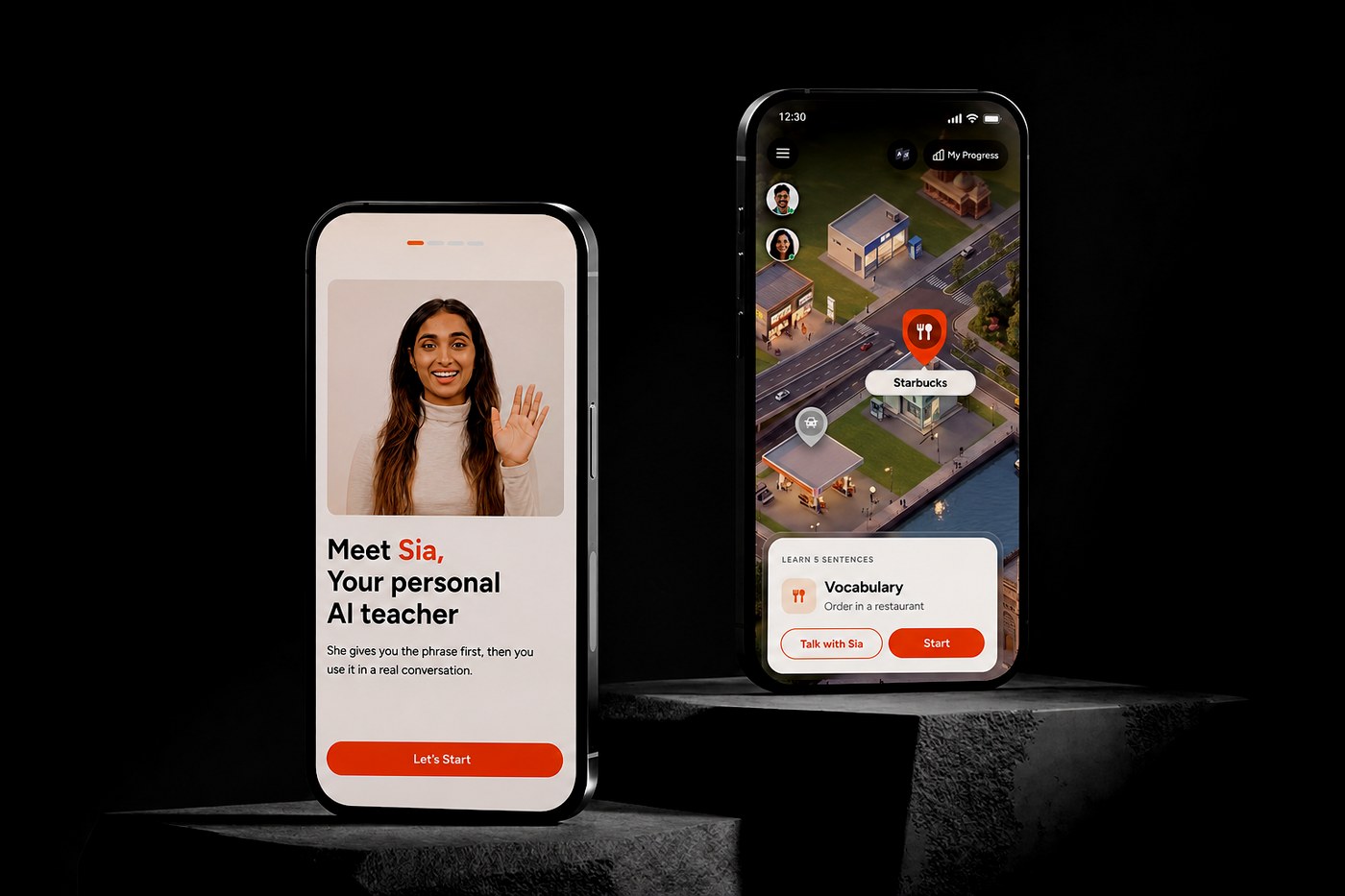
Reading English sentences helps you learn. Speaking them aloud helps you use them in real conversations. SpeakX is an AI English speaking app for Indian learners: you practice speaking on voice calls with an AI tutor, rehearse real-life roleplays such as a shop, a meeting or a phone call, and get feedback on your fluency and pronunciation, with explanations available in Telugu and other Indian languages. Pick the group you practiced today, open the matching roleplay, and say those sentences out loud. It is free to download and start.
Practice today's sentences on SpeakX
These 100 sentences in other languages: with Hindi meaning · with Tamil meaning. The Marathi version will be linked here when it is published.
Frequently asked questions
Is the English to Telugu daily use sentences PDF free?
Yes. The PDF is free, with no signup, and it has the same 100 sentences and Telugu meanings as this article, plus the transliteration column and a 10-day practice tracker.
What are some simple English sentences used at home, with Telugu meaning?
Simple English sentences used at home include “I am at home” (నేను ఇంట్లో ఉన్నాను), “Please come inside” (దయచేసి లోపలికి రండి), “The food is ready” (భోజనం సిద్ధంగా ఉంది) and “I will be back soon” (నేను త్వరగా తిరిగి వస్తాను). Sentences 11 to 20 above cover the home.
How many daily use English sentences should I learn in a day?
Five to ten a day is enough if you say them aloud and use one or two in real conversations. Using a sentence matters more than memorising a long list.
What is the difference between a sentence list and a Telugu-to-English translator?
A translator turns any text you paste into English; it does not teach you to speak. This page is a fixed list of 100 everyday sentences with Telugu meaning that you practice aloud until they come without thinking, which is what a conversation needs.
Can these 100 sentences help me speak English fluently?
They give you a foundation for everyday conversation, but memorising sentences alone does not create fluency. You also need regular speaking, listening and pronunciation practice. Our guide on how to speak English fluently covers the full plan.
Are the Telugu meanings literal translations?
No. Each Telugu meaning is the natural way a Telugu speaker would say the same thing, in the polite మీరు form, not a word-for-word translation. The transliteration column shows the Telugu as it is commonly typed.
Should I use మీరు or నువ్వు?
The Telugu column uses the polite మీరు form, which is safe with anyone. With close friends or younger family you can switch to నువ్వు in Telugu, but the English sentence stays the same, because English “you” does not change.
How can I practice these sentences if no one around me speaks English?
Say each sentence aloud, record it on your phone and play it back, and run imaginary conversations with a shopkeeper or an auto driver. Then find one partner, a friend, a family member or a speaking app, for five minutes a day, so you get feedback on how you sound.